

RQD – Movement Observation and Analysis (OAM)
2:00PM to 5:00PM
$50 (actual cost: $625)
Studio multidisciplinaire du Conseil des arts de Montréal, 1210, Sherbrooke East Street, Montréal
RegisterDevelop a sensitive, precise and insightful eye for movement: transform the way you create, perform and teach dance.
View the Exact Schedule
For Cerformers…
… who want to approach different choreographic worlds with greater confidence, precision and freedom; broaden their expressive range and movement repertoire while working within their own abilities; gain greater accuracy and strengthen their stage presence. All with the aim of generating relevant and diverse artistic proposals throughout creative processes, rehearsals and role revivals.
For Choreographers…
… who want to break out of familiar patterns; generate a wider variety of choreographic material; communicate their intentions clearly; and enable performers to respond to them accurately while respecting their individuality.
For Teachers…
… who want to shake up their habits to create original movement sequences; observe their students more closely and offer feedback that opens up new possibilities based on each person’s abilities; and foster a teaching practice that supports expressiveness and autonomy.
This Training will Also be of Interest to…
- rehearsal directors;
- artists whose practices span performance, creation and teaching;
- emerging artists looking to develop lasting tools that complement their initial training.
What you will Develop through this Training
OAM can truly transform the way you perform, create, teach and collaborate.
Born from a convergence of LBMA (Laban/Bartenieff Movement Analysis) and AFCMD (Analyse Fonctionnelle du Corps dans le Mouvement Dansé — Functional Analysis of the Body in Dance Movement), Movement Observation and Analysis (OAM) is an approach that sharpens your eye for movement, helping you better perceive and understand its subtleties and the relationship between function and expression. It invites you to explore how movement is organized, why it produces a particular effect, and what gives it its quality, expressiveness and potential.
Far more than an analytical approach, OAM provides concrete tools that can be immediately applied to your professional practice, enabling you to observe both your own movement and that of others with precision, sensitivity and nuance. It also helps you communicate your intentions more clearly and develop a shared language that facilitates exchange and fosters greater collaboration.
OAM: a Catalyst for More Inclusive Practices
OAM invites you to observe before judging, understand before correcting, and move away from trying to reproduce a single model. By recognizing that there are many valid ways to organize the same movement, the approach fosters artistic practices that embrace a diversity of bodies, ways of moving and backgrounds, allowing everyone to contribute from their own strengths.
Its tools support the creation of collaborative artistic environments where listening, dialogue and respect for differences nourish both creation and learning.
Finally, OAM opens the door to greater self-awareness, both as a human being and in the way you interact with your spatial and relational environment.
Learning Objectives
By the end of this training, you will be able to:
- develop a perceptive, empathetic and nuanced eye for movement;
- deepen your ability to sense another person’s movement;
- better understand the relationship between how the body organizes itself and the expressiveness of a gesture;
- recognize what influences the quality, intention and presence of a movement;
- communicate your observations and intentions accurately;
- develop precise language that facilitates communication among performers, choreographers, rehearsal directors and teachers.
A Practice-Based Approach
Interspersed with theoretical segments, this 15-hour in-studio training takes a decidedly experiential approach.
The five three-hour sessions will include:
- movement explorations;
- observation among participants;
- analysis of video sequences;
- small-group discussions;
- practical exercises inspired by real-life situations in creation, performance and teaching.
Concepts are introduced progressively so that you can experience and understand them before applying them to your own artistic practice.
- Monday, April 12, 2027, 2:00-5:00 p.m.
- Wednesday, April 14, 2027, 2:00-5:00 p.m.
- Monday, April 19, 2027, 2:00-5:00 p.m.
- Wednesday, April 21, 2027, 2:00-5:00 p.m.
- Friday, April 23, 2027, 2:00-5:00 p.m.
About the Instructors
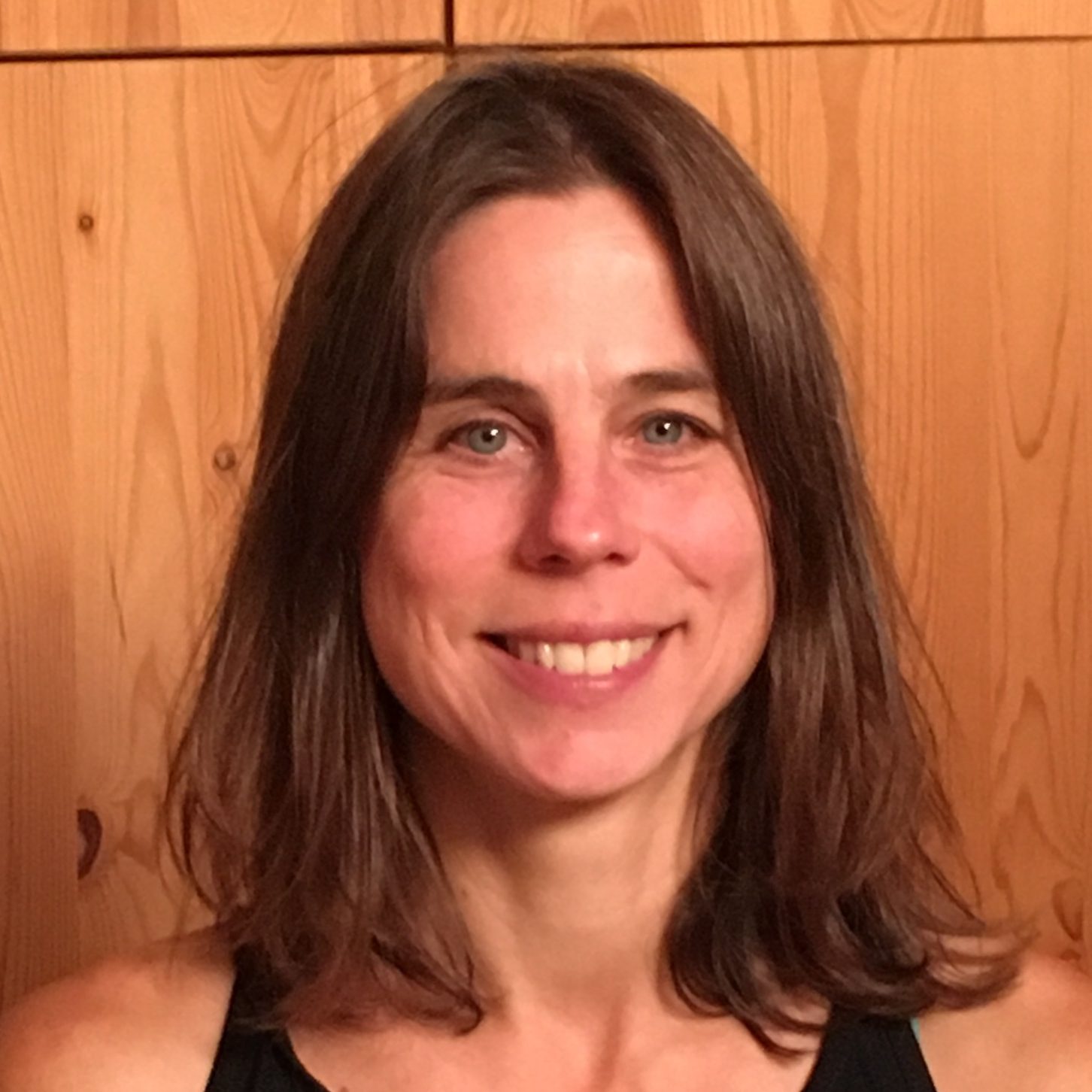
© Marcel Chouinard
Geneviève Dussault
Teacher, researcher, musician, choreographer and performer, Geneviève Dussault has developed an understanding of movement informed by a wide range of artistic practices. A movement analysis specialist and graduate of the Laban/Bartenieff Institute of Movement Studies, she taught for 38 years in UQAM’s Department of Dance, where she received an Award for Excellence in Teaching in 2016 and an Award for Excellence in Research-Creation in 2020. As an artist, she sings with the Chœur du Plateau and has performed in Sarah Dell’Ava’s intergenerational creative projects since 2013 (Oriri, Ori, O2 and O).
Her collaboration with Nicole Harbonnier exploring the complementarity between Laban/Bartenieff Movement Analysis and AFCMD contributed to the emergence of OAM. At the crossroads of creation, musicality, analysis and teaching, her career enables her to approach movement from multiple perspectives and help artists develop an eye that is sensitive, precise and open to its many possibilities.
 Nicole Harbonnier
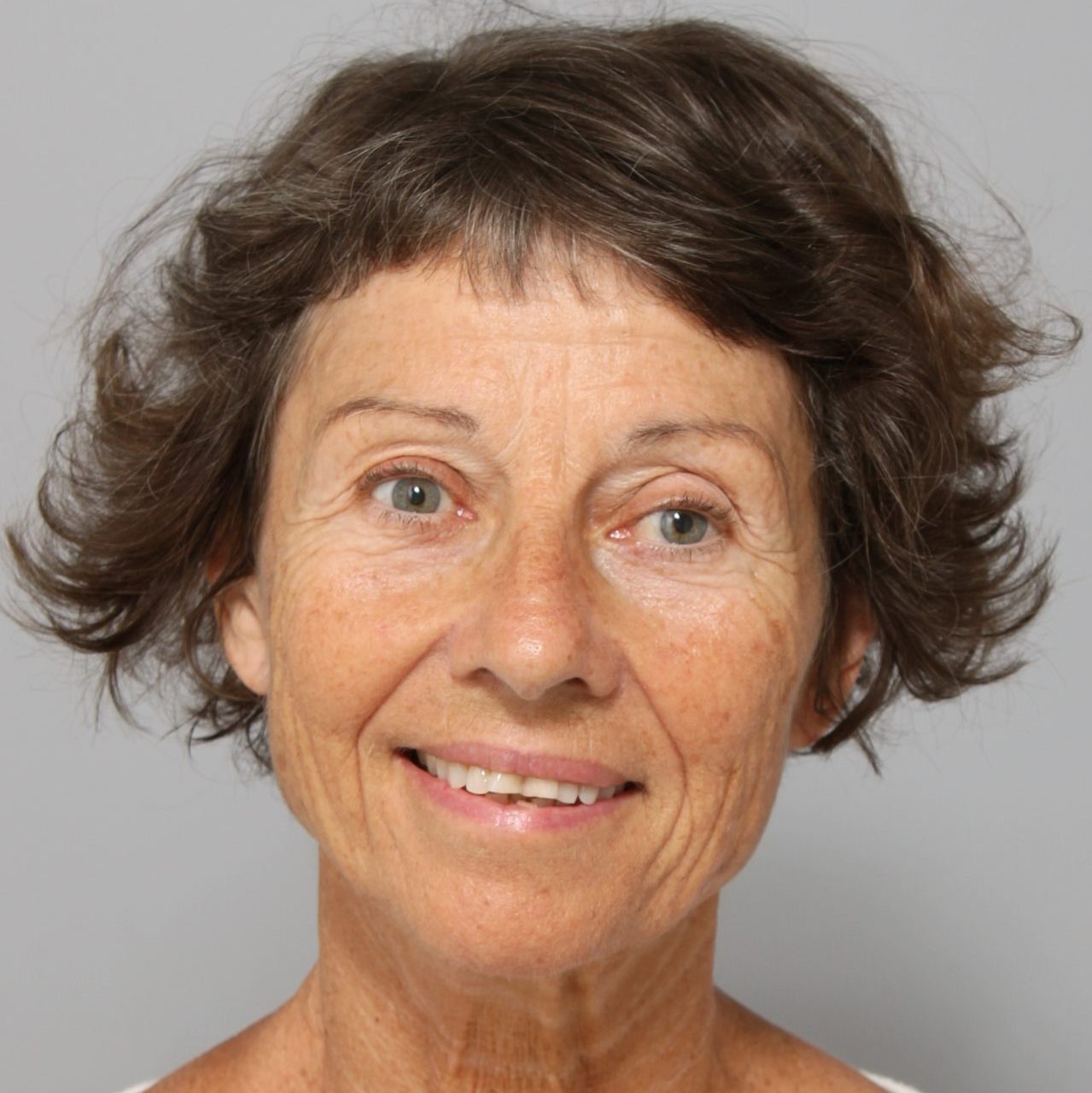 Nicole Harbonnier
A performer, choreographer and artistic director in France for more than twenty years, Nicole Harbonnier subsequently turned her career toward teaching, professional training and movement research. Specializing in Analyse Fonctionnelle du Corps dans le Mouvement Dansé (AFCMD — Functional Analysis of the Body in Dance Movement), she trained dance teachers as part of France’s State Diploma program. She then taught for twenty years in UQAM’s Department of Dance in the fields of somatic education and movement studies. Now retired, she is an associate professor at UQAM and continues to participate in research related to movement analysis.
She holds a master’s degree in dance and a doctorate in Adult Education and was the principal investigator of the research that led to the development of OAM. At the crossroads of artistic practice, teaching and research, her career has shaped an approach to movement that seeks less to impose a model than to understand the person who moves — a perspective at the very heart of OAM.
This training, offered by the Regroupement québécois de la danse, is funded by the Gouvernement du Québec through the Intervention-Compétences program, administered by par Compétence Culture.